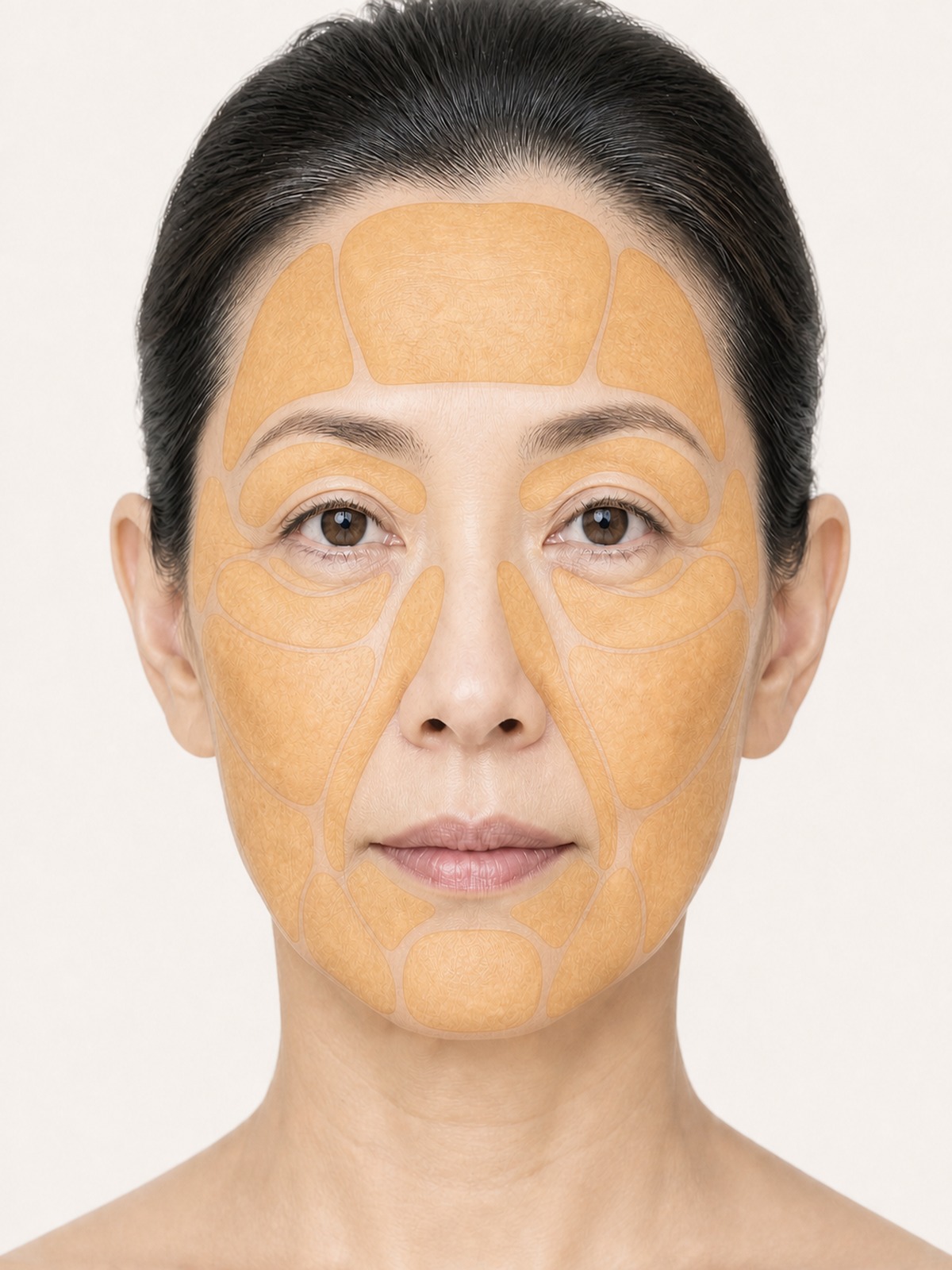
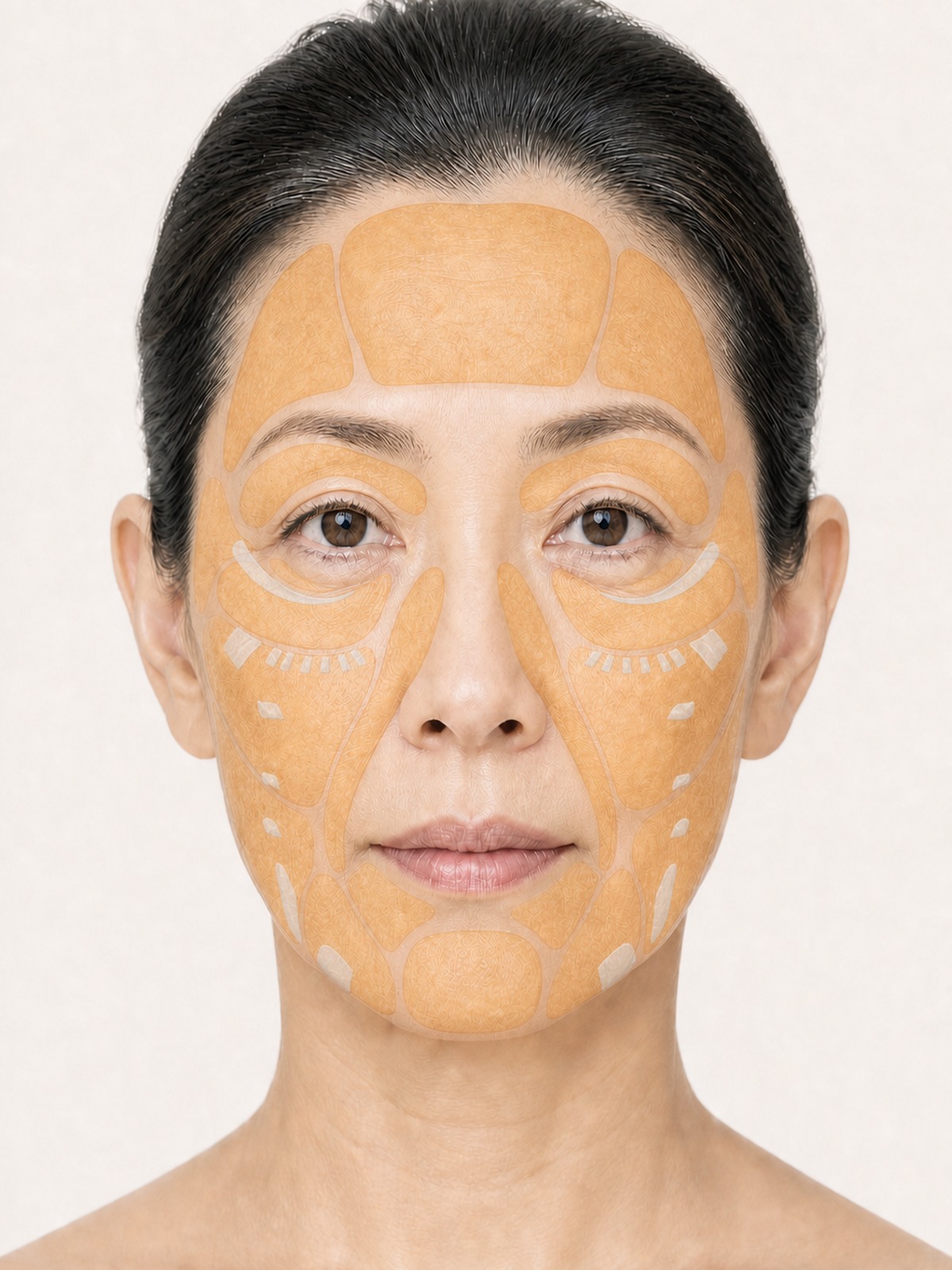
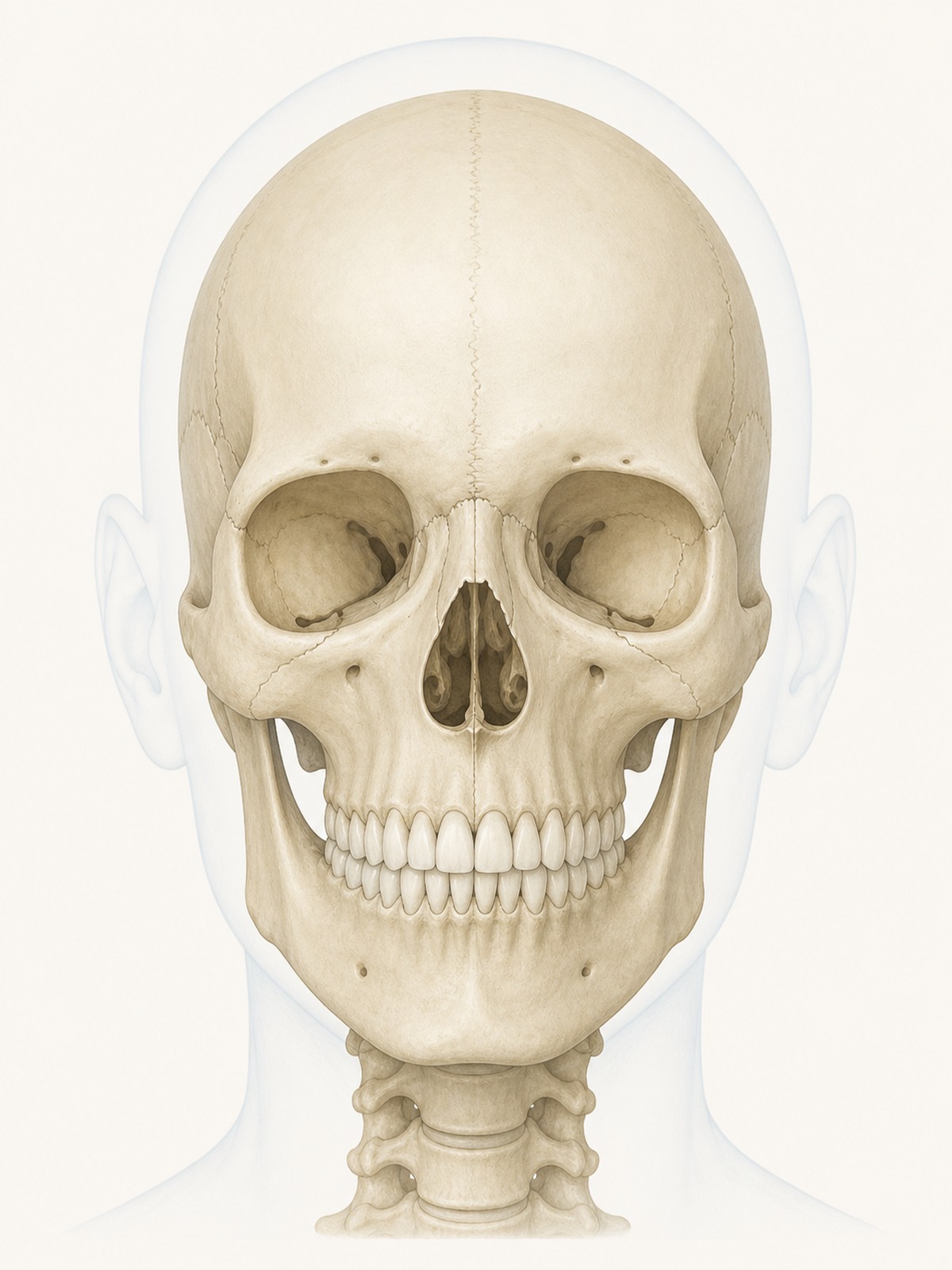
Read the structure of the face
Through surgery, I have developed a practical understanding of the facial nerve, the layered relationships among skin, fat, fascia, and retaining ligaments, and secure fixation to bone or periosteum.
HOME / Facial Rejuvenation

Aesthetic × Reconstructive Surgery
Aging affects the skin, fat, supporting structures, and facial skeleton differently in every face. I identify what has changed, then design only what is necessary.
Philosophy
The face is not simply a sheet of skin. From superficial to deep, skin, fat, supporting structures—including the SMAS and retaining ligaments—and the bony foundation overlap. Age-related change progresses across all of these layers, but the balance differs from person to person. Reading that pattern is the diagnosis.
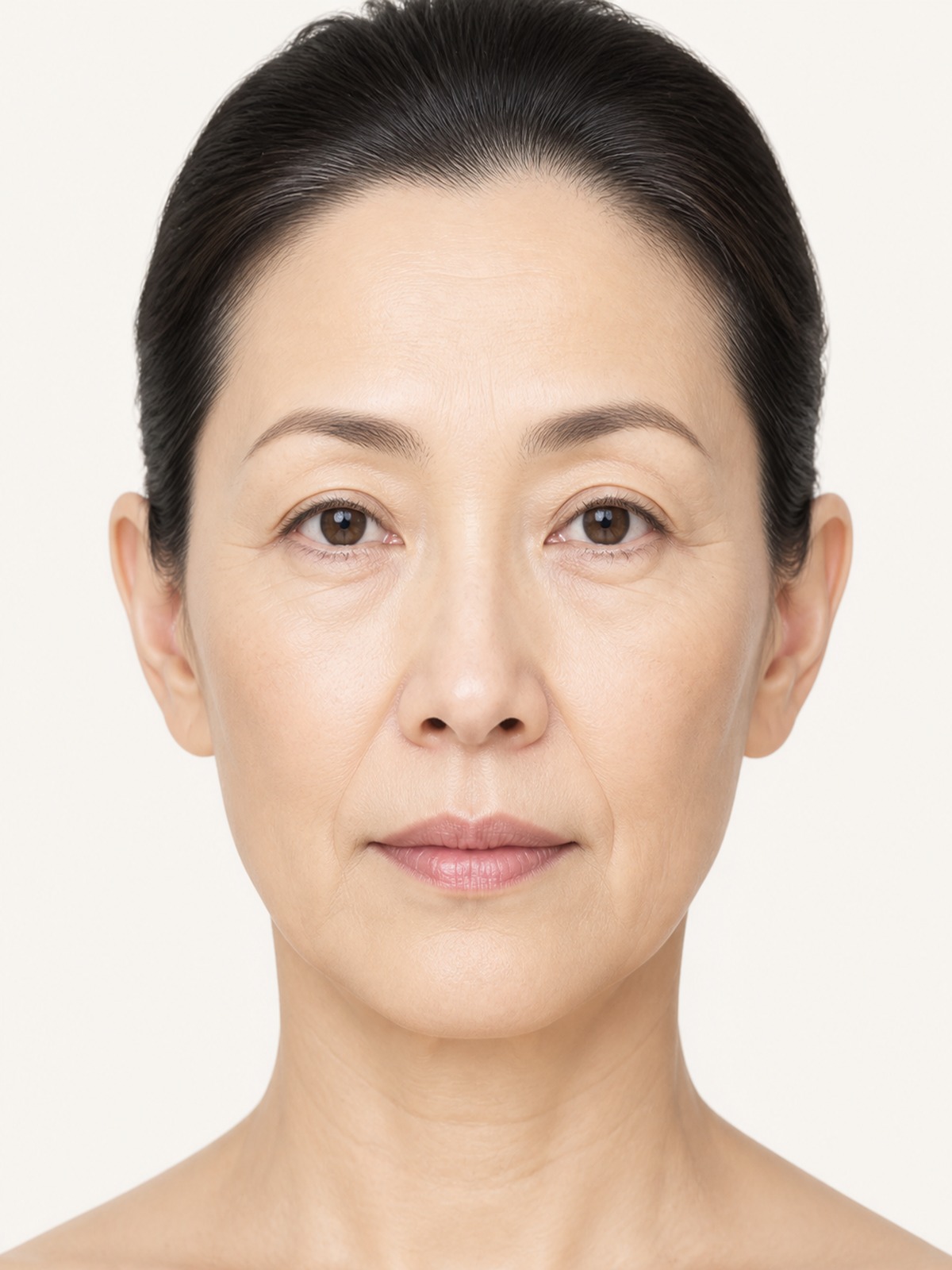
Injectables, threads, and skin treatments each have appropriate indications. I do not dismiss them as meaningless. However,a treatment cannot work if it does not reach the layer causing the problem. The key questions are what is happening and which treatment can reach it. Depending on the diagnosis, I may advise against surgery.
Why a Reconstructive Surgeon Practices Aesthetic Surgery
Reconstructive surgery—particularly head and neck reconstruction—is one of the most technically demanding fields in plastic surgery. After cancer resection, I reconstruct facial bone, facial nerve function, skin, and soft tissue such as muscle and fat in three dimensions, seeking to restore both form and function.
Through surgery, I have developed a practical understanding of the facial nerve, the layered relationships among skin, fat, fascia, and retaining ligaments, and secure fixation to bone or periosteum.
Microsurgery—joining blood vessels and lymphatic vessels 0.3–2 mm in diameter—has trained me to work precisely while minimizing tissue trauma.
I assess change across the facial skeleton, fat, retaining ligaments, SMAS, and skin—including when surgery is not the right choice.
Reconstruction restores lost form and function. Aesthetic surgery addresses age-related change while preserving the individual. The goals differ, but the principles remain the same: work in the correct plane, protect the facial nerve, and secure deeper tissue in a stable position. I bring the technique, knowledge, and considered judgment developed through reconstructive surgery to natural facial rejuvenation.
My reconstructive work is documented on the Reconstructive Surgery pageandAcademic page.
Procedures
I do not recommend the same operation to every patient. The procedures below may become options after assessment. All listed treatments are self-funded and are not covered by Japanese public health insurance.
The fees shown are Kai Clinic Tokyo's standard fees, including tax, as of September 2, 2026. Discounts may be available through the clinic's monitor program or other arrangements. Fees may change, and the total also varies with the combination of procedures and anesthesia. Please confirm eligibility and the final amount in the estimate issued by Kai Clinic Tokyo after consultation. Kai Clinic Tokyo Official Fee Schedule ↗
Rather than pulling the skin alone, this operation releases and repositions support in the deep plane beneath the SMAS, restoring lax tissues of the face and neck toward a more natural position. When central submental laxity is pronounced, submental platysma plication (Pelican surgery) may be added.
Incisions are placed around the ear, and selected retaining ligaments are released. The deeper tissues, including the SMAS and platysma, are repositioned and secured before excess skin is removed and closed under minimal tension. Pelican surgery uses a small submental incision to adjust deep fat and the platysma.
Extended Deep Plane Face and Neck Lift: JPY 2,200,000
Submental platysma plication (Pelican surgery): JPY 1,100,000
Possible risks include swelling, bruising, pain, hematoma, infection, scarring, delayed wound healing, skin necrosis, hair loss, numbness or altered sensation, asymmetry, contour irregularity, ear deformity, facial-nerve or other nerve injury, allergic reactions, and anesthesia-related complications. Swelling and bruising generally improve over one to two weeks; final settling may take three to six months.
Upper-eyelid laxity or heaviness and lower-eyelid bulging, hollowing, or excess skin are treated according to the layer responsible. Options include a sub-brow lift, skin excision through the eyelid crease, or ptosis surgery for the upper eyelid, and transconjunctival fat removal or transcutaneous or transconjunctival fat repositioning for the lower eyelid.
A sub-brow lift removes excess skin below the eyebrow while preserving the existing eyelid crease. Lower-eyelid surgery may reposition bulging fat into adjacent hollows rather than simply removing it, with adjustment of the skin, orbicularis muscle, or midface when indicated.
Sub-brow lift: JPY 462,000 / complex case: JPY 583,000
Upper-eyelid skin excision through the eyelid crease: JPY 275,000
Ptosis surgery with double-eyelid formation: JPY 770,000
Transconjunctival fat removal: JPY 330,000
Transconjunctival fat removal with fat grafting: JPY 605,000
Transconjunctival fat repositioning: JPY 495,000 / with midface lift: JPY 605,000
Transcutaneous fat repositioning: JPY 660,000
Possible risks include swelling, bruising, redness, pain, infection, hematoma, scarring, asymmetry, over- or under-correction, hollowing or contour irregularity, numbness, dry eye or tearing, incomplete eyelid closure, lower-eyelid ectropion, entropion or retraction, double vision, and allergic reactions. Visual impairment is very rare but possible. Swelling and bruising generally improve over one to two weeks, while scars and firmness may take three to six months to settle.
Excess fat is reduced from the cheeks, jawline, or submental area, while the patient’s own fat can be transferred in small amounts to age-related volume loss in the temples, midface, or around the eyes.
For liposuction, a fine cannula is inserted through incisions only a few millimeters long to remove selected subcutaneous fat while shaping the contour. For fat grafting, harvested fat is processed and distributed across multiple well-vascularized tissue planes. Areas to reduce and areas to restore are planned in the context of the whole face.
Facial liposuction: JPY 275,000 per area
Fat harvesting and processing: JPY 110,000–220,000
Fat grafting: JPY 132,000–950,000
The total fat-grafting fee is the sum of the harvesting and processing fee and the fee for each treatment area.
Possible risks include swelling, bruising, pain, infection, hematoma, numbness, asymmetry, surface or contour irregularity, skin laxity or pigmentation, fat resorption, over- or under-correction, nodules, calcification, fat necrosis, and donor-site scars. Fat grafting can cause vascular occlusion, skin necrosis and, very rarely, severe complications such as blindness or stroke. Swelling and bruising generally improve over one to two weeks; contour and graft retention stabilize over approximately three to six months.
Consultation
The process begins with diagnosis
01
We discuss your concerns and take standardized photographs. I will ask not only about your goals but also about previous treatments and their results.
02
I assess what is occurring in the skin, fat, supporting structures, and facial skeleton, then explain the components of change.
03
We design the treatment options and their sequence.When a non-surgical option is more appropriate, I may advise against surgery.
04
After reviewing the fee, downtime, and risks, please take time to decide. You do not need to make a decision during the consultation.
About